

Original equipment manufacturers (OEMs) operate in highly competitive markets where efficiency and accuracy directly impact success. Each finished product depends on the strength of its parts, and even small delays or defects can disrupt the entire supply chain.
Precision CNC machining is crucial for OEMs, offering a reliable method to produce parts that meet exact specifications, scale efficiently with demand, and integrate seamlessly into larger assemblies.
For companies seeking stability in a competitive market, CNC machining is key to a strong and reliable manufacturing process.
Why OEMs Require Tight-Tolerance Components
OEM production depends on parts that fit seamlessly into larger assemblies. Even the slightest dimensional variation can cause downstream failures, warranty issues, or safety risks.
That’s why OEM buyers demand machining processes that can hold tolerances within thousandths of an inch. CNC machining makes this possible by automating cutting paths with computer-driven precision. The result is repeatable accuracy across thousands, or even millions, of parts.
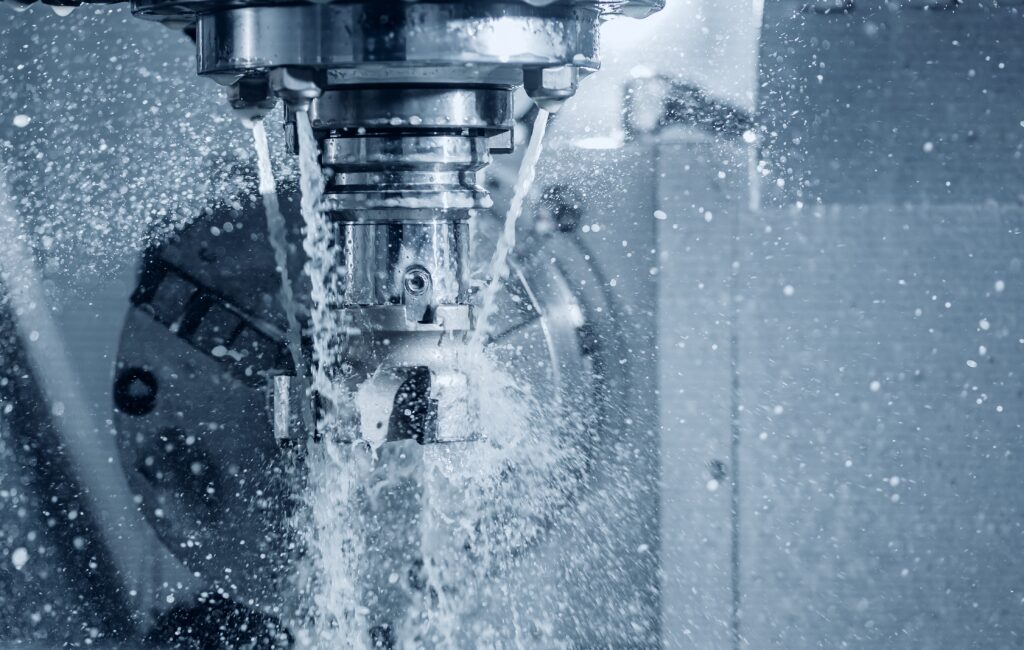
Benefits of CNC Machining in OEM Supply Chains
When integrated into an OEM’s supply chain, CNC machining delivers three key advantages:
- Reliability – Automated processes minimize human error and keep quality consistent across runs.
- Efficiency – CNC machines can operate lights-out, reducing cycle times and labor requirements.
- Scalability – Flexible capacity supports everything from low-volume prototypes to high-volume production.
The result is a supply chain defined by reliability, precision, and the flexibility to scale smoothly.
Common CNC Parts and Assemblies for OEMs
OEM applications rely on custom-machined parts that must be both precise and durable. CNC machining supports components such as:
- Ball studs and pins used in automotive and seating systems
- Brackets for gas springs, tanks, or industrial assemblies
- Custom fittings, connectors, and fasteners
- Precision-turned components for mechanical or electrical housings
By machining metals and plastics, such as steel, brass, aluminum, and engineered polymers, CNC processes provide the essential parts and assemblies that OEMs depend on.
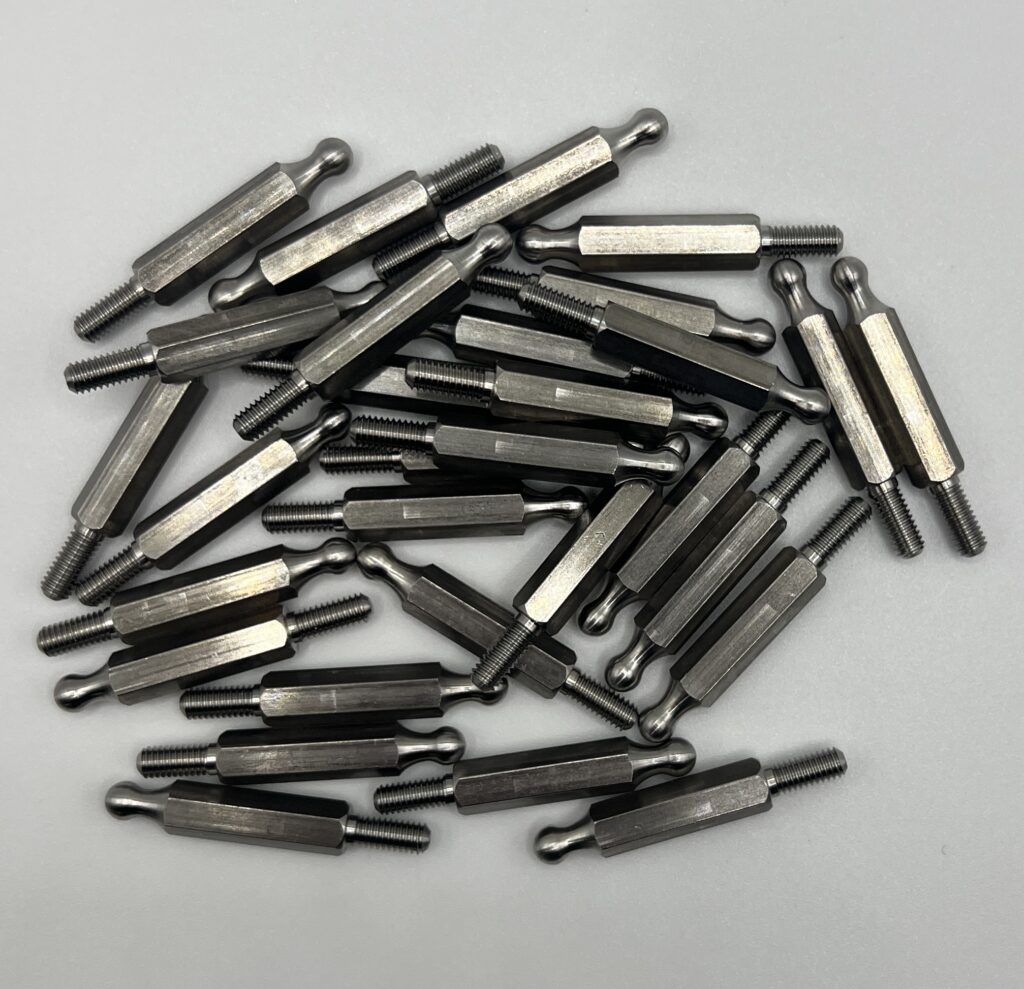
Volume Flexibility and Repeatability Advantages
OEMs often face fluctuating demand, from prototype development to mass rollouts. CNC machining provides a rare combination of flexibility and repeatability.
You can adjust programs for short runs of a few hundred parts or scale them up for high-volume production in the hundreds of thousands. Each component maintains the same high level of accuracy and consistency as the first, thanks to cutting-edge programming and multi-axis machining systems. This production scalability gives OEMs the confidence to respond quickly to new opportunities while maintaining consistent part quality.
Vendor Selection Tips for OEM CNC Partners
Choosing the right vendor is essential for keeping production lines running on time. When selecting a machining partner, OEMs should think about several important factors that can affect their supply chain.
First, look for certification, such as ISO 9001:2015. This shows a commitment to quality. Next, check if the partner can handle both small and large production volumes without delays to ensure a smooth supply chain.
Technology is important, too. Modern CNC machines and advanced ERP systems offer better traceability and transparency. Lastly, consider the vendor’s history of reliable delivery and low defect rates. Picking the right partner gives confidence that production lines will stay on schedule.
Scaling Smart with CNC Machining
For OEMs, CNC machining is a strategic advantage. The process creates accurate and consistent parts, supports designed solutions, and can scale from small batches to large production.
Let’s talk about how CNC machining can streamline your supply chain.